
To have a comprehensive research program on fire safety, a Compartment Fire Test Facility (CFTF) has been set up at SRI-AERB, Kalpakkam. This facility is used for basic research in enclosure fires, investigation of mitigation methodologies & techniques, and to provide inputs for regulatory activities in the area of fire safety. The fire compartment of CFTF conforms to the specifications of ISO-9705 room and is extensively instrumented to measure various fire parameters. The main objectives of this facility are:
Characterize and assess the damage potential of class-B and C type fires.
Demonstrate the efficacy of various fire mitigating techniques.
Develop a monograph on enclosure fires.
Validate currently used numerical models / CFD codes for application to specific fire scenarios.
Generate data for regulatory decision making.
Promote basic fire research through collaboration with academic institutes.
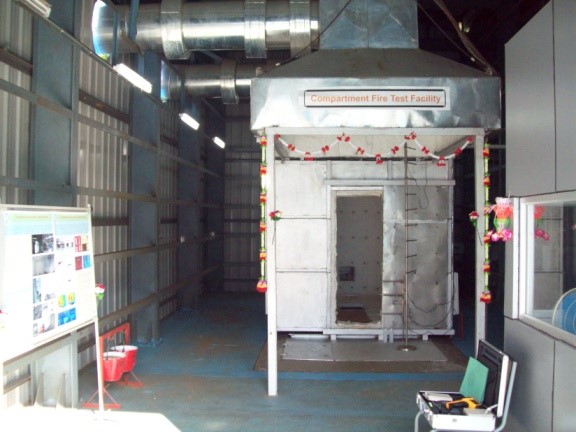
Compartment Fire Test Facility
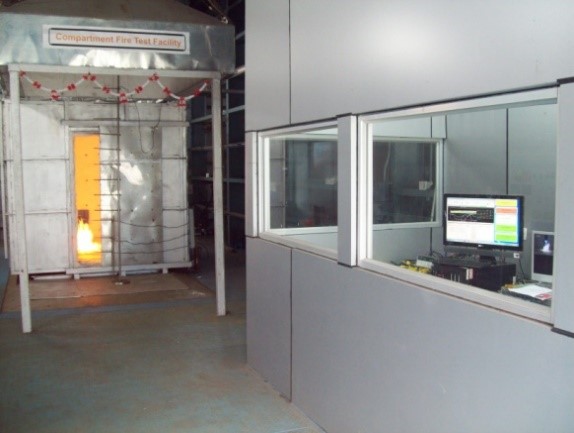
A pool fire experiment in progress
SRI Engineering Hall
An engineering hall consisting of ahigh bay (160 sq. m, height 8.5 m), a low>bay (160 sq. m,height 4.25 m); and office space (160 sq. m) is available. As of now,three experimental facilities, namely Hydrogen MitigationFacility (HYMIF),Water and Steam Interaction Facility (WASIF)and Core Melt Retention Facility (COMREF) facility are envisaged to come up within the high bay of the hall. An experimental Facility for investigating PT corrosion behaviour and flow mal-distribution is coming up within the low bay.
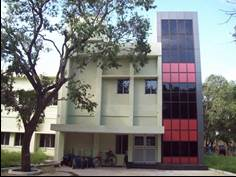
Front view of the SRI Engineering hall
Research Laboratories
A well-equipped Radiation Physics laboratory has been established at SRI to carry out radiation shielding and environmental radioactivity related experiments. This laboratory has come into existence in 2011 during the XI plan project to validate the computational tools used for radiation shielding and streaming studies against experiments. The laboratory houses a scintillation based NaI detector and an advanced High Purity Germanium Detector (HPGe) for gamma spectrometric studies; a hand held neutron spectrometer for neutron dose and spectrum measurements; a TLD reader and a portable teletector for gamma radiation survey and monitoring. Apart from the instruments, several activation foils are also procured for carrying out neutron shielding experiments.
Radiation Physics Laboratory
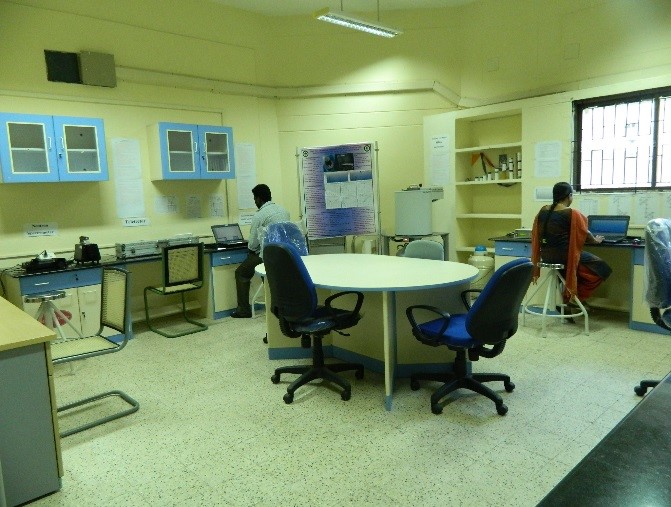
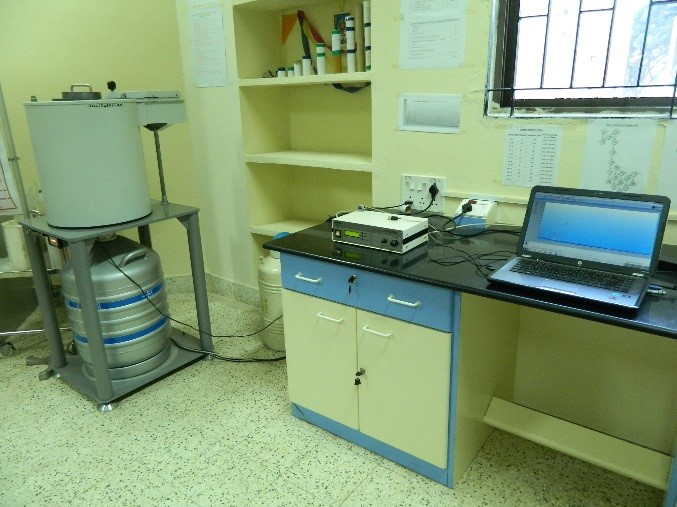
In the recent past, the notable experiments carried out by using the laboratory facilities are as follows:
Lab-scale gamma streaming experiments in ducts and voids of various shapes
Neutron streaming experiments in bent ducts
Shield design optimization for Am-Be neutron source
Efficiency measurement of gamma spectrometric devices and validation through Monte Carlo simulations
Environmental radioactivity measurements of soils from various parts of south India
Chemistry Laboratory
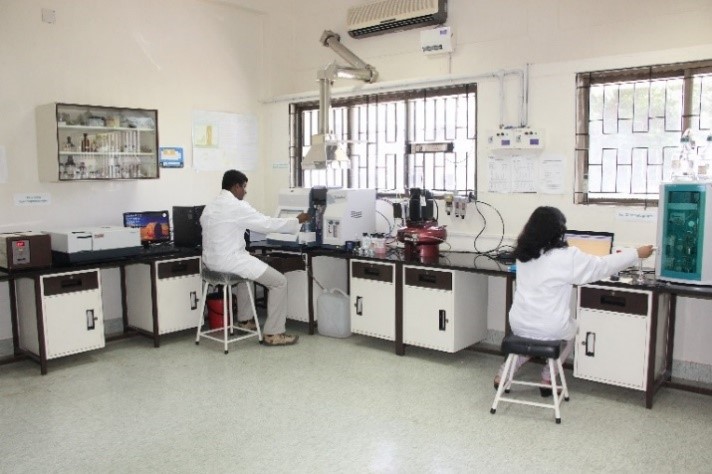
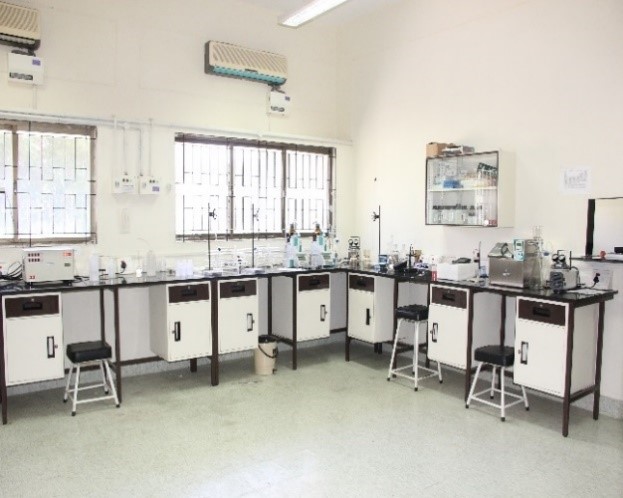
The following are some of the analytical activities being carried out at SRI chemistry laboratory
Characterization of bore water sample using wet chemical and instrumental techniques
Degradation of organic pollutants using in-house synthesized nanoparticles of Titania and Gallia by employing photo reactor
Uptake studies of radionuclides using inorganic sorbents
Dip coating of Alumina and Titania prepared by sol-gel techniques
Geochemical analysis and geophysical analysis of environmental samples
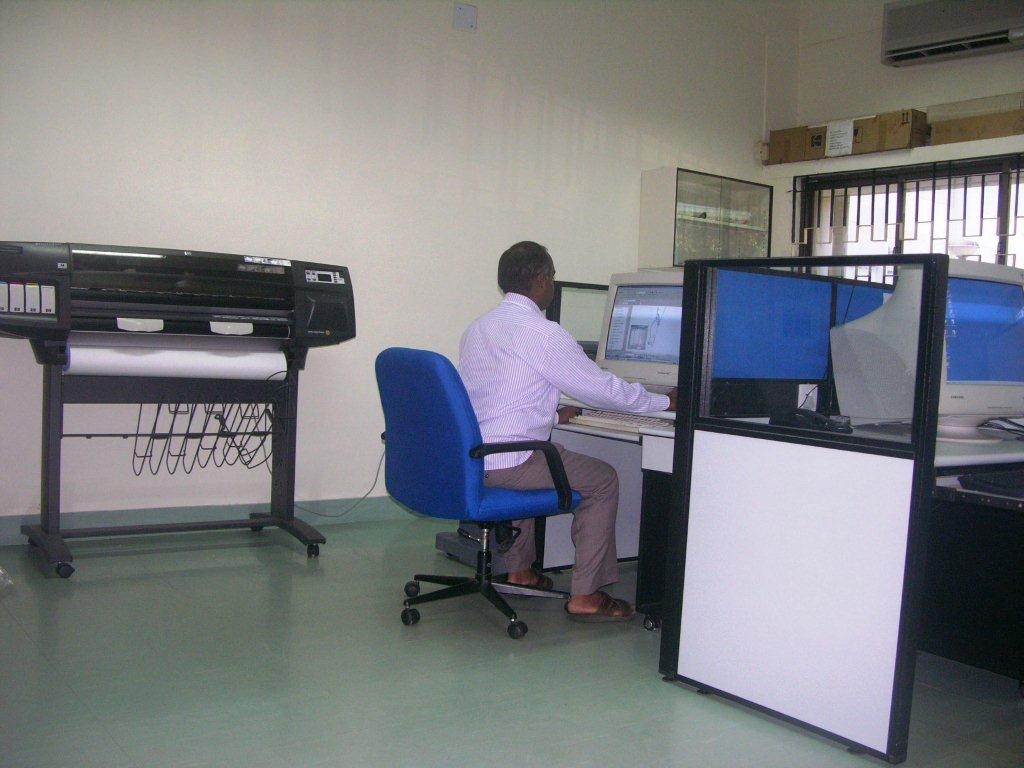
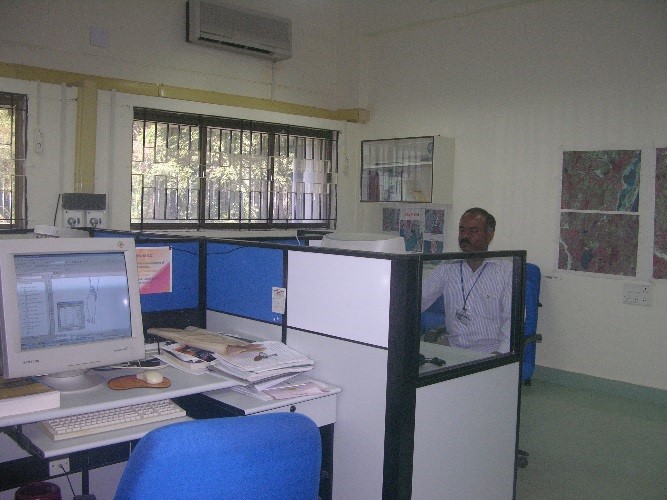
A state-of-art laboratory for RS-GIS based activities is established in SRI. The lab consists of
High resolution topographic data for select areas of interest to AERB
High resolution satellite data for DAE sites (Digital aerial photo, world view, Quickbird, IKONOS, Cartosat, IRS-PS)
Geology maps published by GIS for important sites
Soil maps Image processing, GIS and photogrammetric software
RS-GIS Laboratory